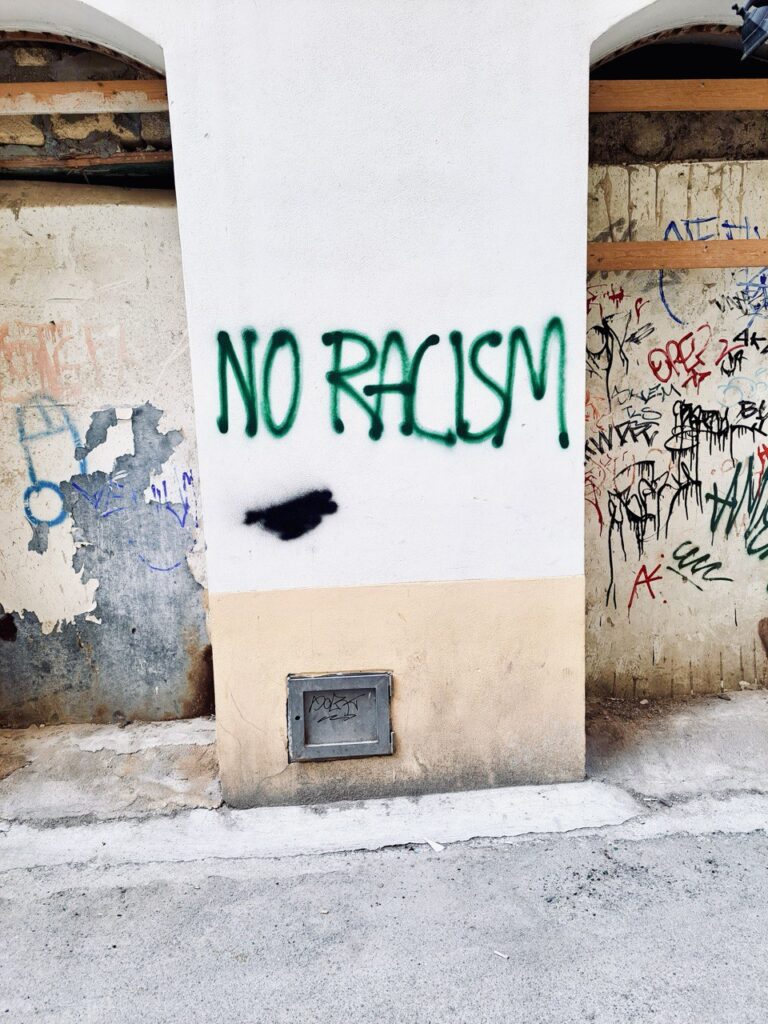
In recent years, we have witnessed a global rise in racism and the intensification of anti-migrant policies. Iran is no exception. Anti-migrant racism has been systematically constructed by the Iranian state, often blaming migrants for the country’s socio-economic challenges. Following the Iran-Israel war in June 2025, Afghanistani migrants have been scapegoated and even accused of espionage for Israel. Such narratives not only distort public perception but also foster division and insecurity within society.
Those labeled as ’foreigners’ (atbae biganeh) have, in many cases, lived in Iran for decades. They are integrated members of local communities, socially, economically, and culturally. Citizenship is more than legal nationality; it encompasses active participation and belonging in the life of a society. Many so-called ’foreigners’ contribute daily to the dynamism and development of Iran. They are citizens in every meaningful sense of the word.
Ironically, millions of Iranians who have lived abroad for decades retain full citizenship rights, including the right to vote. Meanwhile, people who have lived their entire lives in Iran, working, raising families, and contributing to society, are denied basic rights. This is not just an ethical failure; it is a fundamental threat to democracy.
The Iranian authorities have fostered the illusion among Iranian workers that the real threat to their class interests is migrants, not widespread unemployment, not political repression, not systemic corruption, not unpaid wages, nor economic insecurity. This scapegoating divides the working class against itself, weakening collective struggle and solidarity.
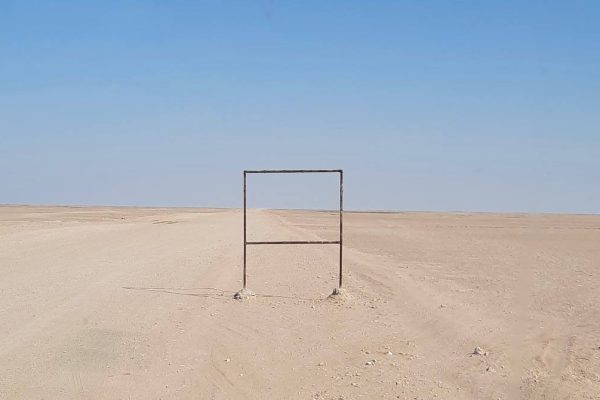
Afghanistan and Iran are neighbors. The border between them should not be seen as a line of separation but a site of shared responsibility. Borders are not ’point zero’ as state rhetoric suggests; they are intersections of lives and histories. They are spaces where the ethics of coexistence must begin.
The presence of the Afghan migrant community in Iran spans over four decades and is estimated at around six million people, nearly half of whom are registered under various legal categories, while the rest remain undocumented. They have arrived in multiple waves, and many were born in Iran. Their situation has always been precarious, with limited access to secure employment, education, and healthcare. Moreover, U.S.-led international sanctions against Iran have further exacerbated their vulnerability by restricting humanitarian aid and reducing the availability of international support services.
In early July, a humanitarian crisis unfolded at this border. Within a week, hundreds of thousands of people were detained and deported to Afghanistan. These deportations were often violent. Migrants were forced to pay for their own removal and treated with cruelty and humiliation. What awaits them on the other side of the border is not safety or reintegration, but further hardship and danger.
Afghanistan is facing one of the most complex and large-scale forced displacement crises in the world. An optimistic estimate suggests that over 20% of the Afghan population is currently displaced, internally or externally. This is several times the global average of 3.3%. For many, displacement has become a permanent condition. Five decades of foreign occupation, civil war, environmental degradation, and widespread poverty have decimated Afghanistan’s infrastructure, education, agriculture, and economy. Since the Taliban’s return to power, international isolation has made conditions even worse. Unsurprisingly, migration remains the only viable path for many Afghanistanis.
For years, Afghanistan has been one of the world’s top sources of refugees, including the highest number of unaccompanied child asylum seekers. Today, it has also become one of the primary destinations for deportees from Iran and Pakistan. The question is not where these people are being sent, but to what conditions. For many, deportation to Afghanistan is an experience of exile. Deportees are abandoned upon arrival. They receive no support from Afghan authorities.
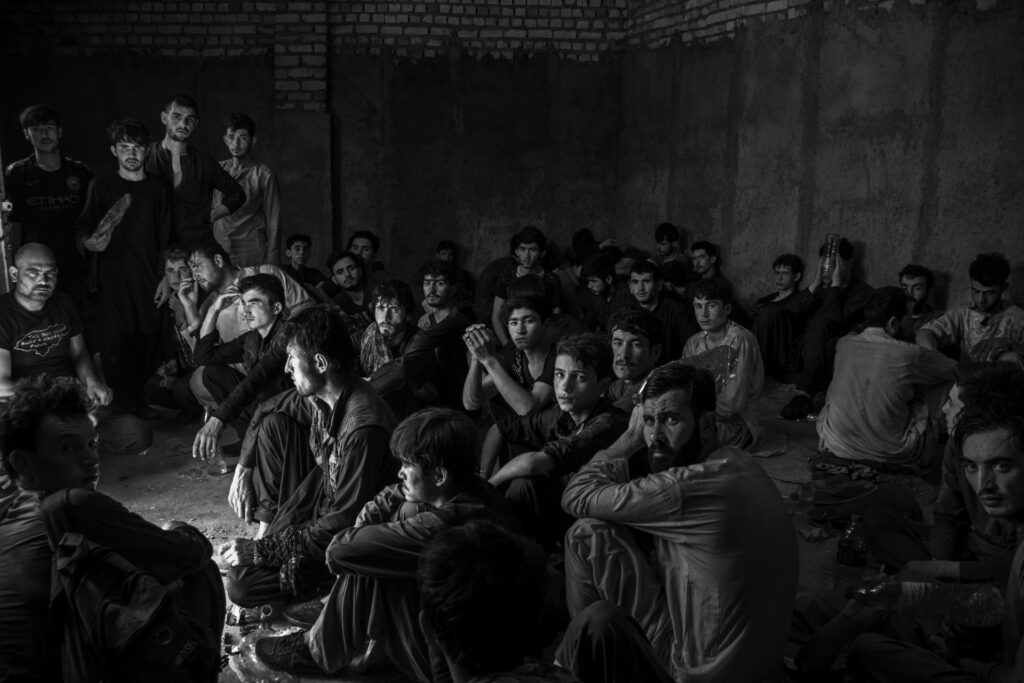
For many of them, deportation often means the forced return to a situation worse than the situation prior to the initial departure, politically, financially, and socially. Consequently, adjustment into the country of citizenship is usually uncertain and difficult. Opposite to the what Iranian authorities attempts to show, the deportees do not go back home, but they re(join) a transnational space of expulsion, oscillating between re-departure and re-deportation.
There are multiple factors that make adjustment difficult, if not impossible, for the deportees. First, the majority of them belong to the Shia Hazara ethnic minority, who have historically been exposed to racial harassments and institutionalized discrimination by the powerful Pashto majority. Reports by Human Rights Watch and Amnesty International have documented systematic sectarian attacks targeting Hazara people by Taliban forces. Many deportees cannot return to their hometowns or villages due to armed conflicts.
Second, deportation means also deletion of remittances, i.e. the source of livelihood for many poor families. Therefore, the whole household economy is affected by deportation. Generally, deportation negatively affects both the deportees and the receiving communities. Thus, the financial insecurity and unpaid debt force them to leave the country again. Third, many of the deportees were born in Iran or have lived most of their lives there. Afghanistan is a foreign country to them. They lack social networks, safe housing, and even legal identification. They are rejected not only by the country that expelled them, but also by the country they are returned to. Afghan authorities often refuse to issue ID cards to deportess, claiming they are ‘not in the system’. The same state that accepts them as nationals for deportation refuses to recognize them as citizens once they arrive. Deportees face multiple forms of harassment. Those who grew up in Iran face harassment and derision by being called iranigak (acting Iranian).
Deportees are sent to a country which is already struggling with a high rate of unemployment, widespread poverty, social insecurity, and large internal displacement. Finding themselves in radical insecurity outweighs the risk of being caught and deported once again. A UNHCR report from 2012 shows that up to 80 per cent of the forcibly removed people to Afghanistan attempt to start a new migratory adventure within a short period of time after the arrival. Interestingly, there is a dialectical interplay between deportation and human smuggling.
Deportation feeds human smuggling networks. While legal travel to Iran may cost over €500 in passport and visa fees, an irregular border crossing costs only around €250. Deportation becomes not a deterrent, but a business model that fuels exploitative systems and endangers lives.
Like other deterrence-based migration policies, mass deportation fails because the root causes of migration, war, repression, poverty, and climate crisis, persist. The recent-build high border wall and mass deportation cannot stop people who are forced to flee. Deportation deepens inequality. It punishes the vulnerable while doing nothing to resolve root causes. Deporting people to Afghanistan is politically irresponsible, ethically wrong, and economically unsound. Deportation disrupts household economies, cuts off remittances, and forces families into debt, poverty, or renewed displacement.
The right to life knows no borders. To defend migrants is to defend all of us. To uphold the dignity of those who live among us is to affirm the kind of society we want to live in. We must end the deportations to Afghanistan. Defending citizens is defending society. Defending migrants is defending everyone.